Browser Portals Take Center Stage as Flash Fades, Reshaping Multiplayer Tournament Landscapes Worldwide
Drew Flores · Aug 7, 2026

Browser Portals Take Center Stage as Flash Fades, Reshaping Multiplayer Tournament Landscapes Worldwide
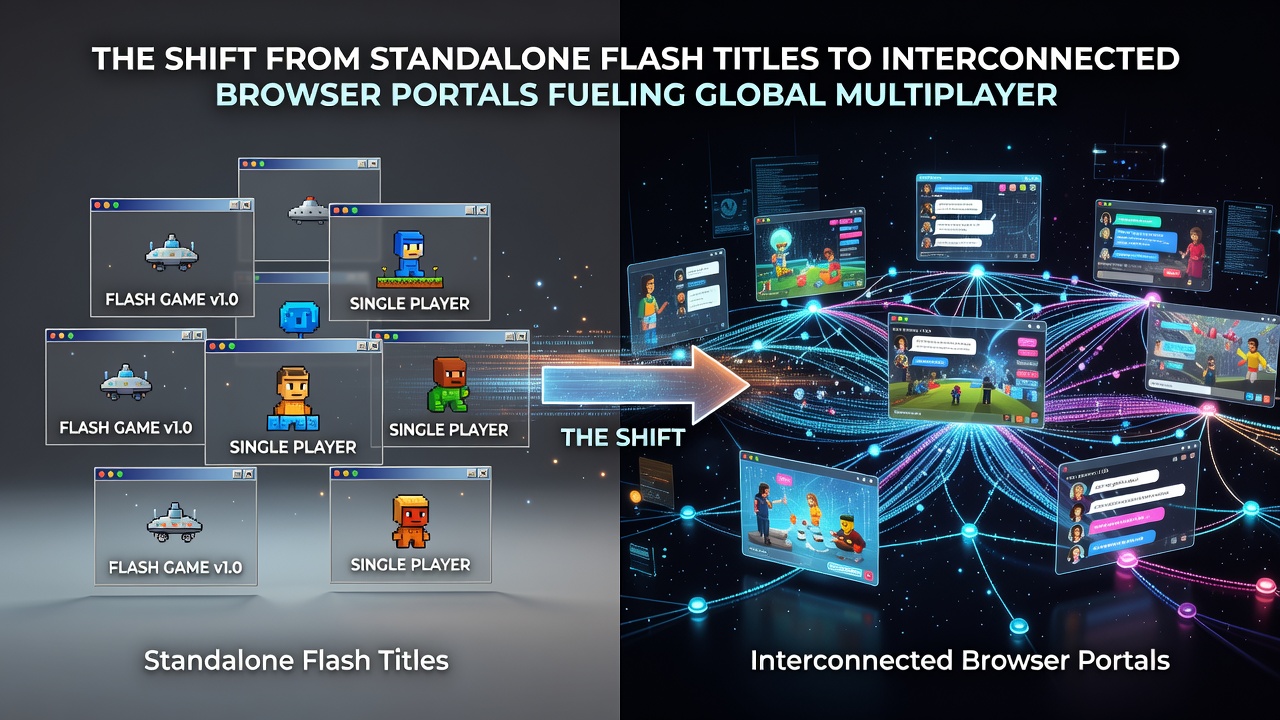
Standalone Flash titles once dominated casual web play through isolated single-player loops and basic multiplayer rooms, yet industry data from the Entertainment Software Association reveals a steady migration toward HTML5-based portals that link players across continents in real time. Observers note this transition accelerated after major browsers dropped Flash support in 2020, forcing developers to rebuild experiences around WebGL and WebSocket standards that enable persistent connections without plugins.
Technical Foundations Behind the Migration
Flash relied on proprietary code that created security vulnerabilities and device compatibility issues, whereas contemporary browser engines integrate directly with operating systems and allow seamless scaling across desktops, tablets, and phones. Researchers at the University of California, Irvine documented how WebAssembly reduced load times by up to 60 percent compared with legacy Flash embeds, giving portal operators the infrastructure needed to host thousands of concurrent users during peak tournament windows. Game studios responded by embedding matchmaking APIs, leaderboards, and live spectator modes that turn individual sessions into shared competitive events.
Portal Architectures Fueling Tournament Growth
Modern platforms aggregate titles under unified accounts, letting players carry progress and rankings from one game into another within the same ecosystem. This design supports daily qualification brackets that feed into monthly regional finals, with data streams feeding global standings updated every few hours. In August 2026 several circuits are scheduled to run simultaneous qualifiers across North American, European, and Asia-Pacific servers, using cloud orchestration tools that balance load and minimize latency below 50 milliseconds for most participants.
Those who track participation metrics point to annual reports from the Interactive Software Federation of Europe showing a 240 percent rise in registered tournament accounts between 2022 and 2025. The growth stems from built-in social features such as guild systems and cross-game currency that keep users returning rather than drifting between disconnected websites.
Case Examples of Circuit Expansion
One prominent North American organizer integrated three browser-based strategy titles into a single ladder system last year, resulting in over 180,000 unique entrants for its summer championship series. European developers followed suit by standardizing API calls for score verification, allowing independent tournaments to pull verified results without manual oversight. Australian regulators have begun reviewing these platforms under digital competition guidelines, focusing on fair play algorithms and data privacy rather than traditional licensing frameworks.
What's interesting is how prize pools now draw from advertising revenue and optional cosmetic purchases instead of entry fees alone, creating sustainable models that smaller studios can access. Figures from the Canadian Interactive Digital Media Association indicate average tournament payouts grew from roughly $12,000 in 2021 to more than $85,000 across major circuits by early 2026. Developers attribute the increase to higher viewer engagement on integrated streaming embeds that keep audiences inside the portal rather than redirecting them elsewhere.
Challenges and Ongoing Adjustments
Network stability remains a concern during large-scale events, prompting operators to deploy regional edge servers and dynamic routing. Security teams continue to refine anti-cheat systems that scan browser memory in real time, though false positives occasionally disrupt legitimate players. Studies published by the Massachusetts Institute of Technology Game Lab highlight how transparent appeal processes and community moderators help maintain trust as circuits scale.
Yet the shift has also opened doors for independent creators who publish directly through portal submission portals instead of negotiating with app stores. This lowers barriers while still feeding into the same competitive frameworks that reward consistent performance across seasons.
Conclusion
The move from isolated Flash experiences to interconnected browser environments has produced measurable expansion in organized multiplayer competition. Participation records, technical benchmarks, and regional policy developments all point to continued integration of tools that support larger, more frequent global circuits. As infrastructure matures, the same systems are expected to incorporate additional genres and audience segments without requiring separate client downloads or accounts.