Browser Tournaments and the Growth of Informal Player Groups Across Generations
Drew Flores · Aug 17, 2026
Browser Tournaments and the Growth of Informal Player Groups Across Generations
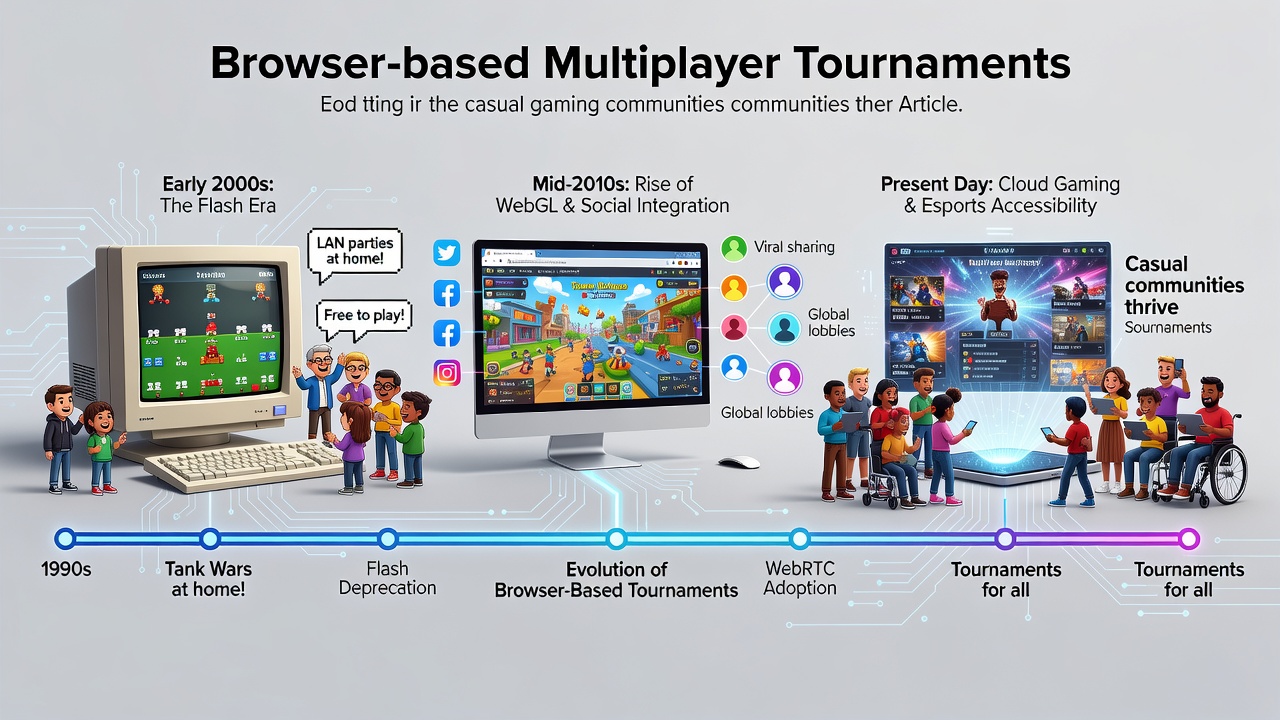
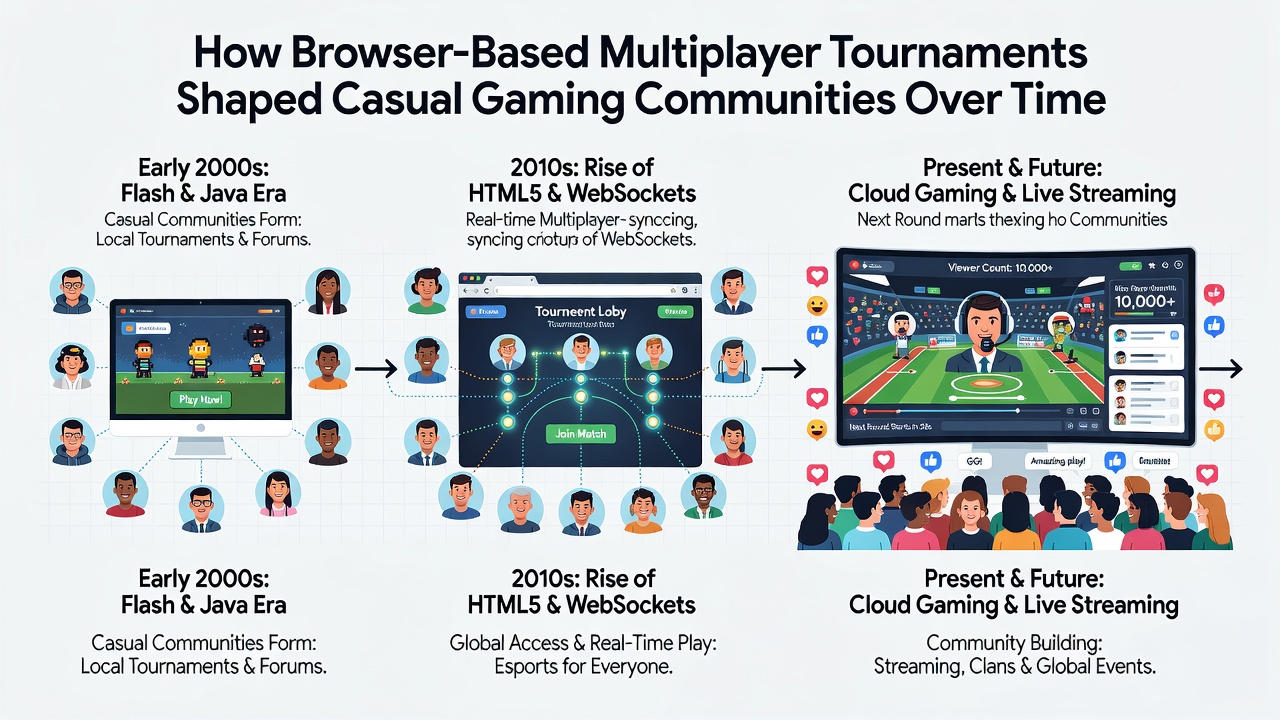
Browser-based multiplayer tournaments began with simple Flash and Java applets in the late 1990s, and they allowed players to join matches without downloads or installations while connecting through basic web pages hosted on sites like Newgrounds and Armor Games. These early events drew small groups who competed in real-time matches, and data from industry reports shows participation grew steadily as internet speeds improved through the early 2000s.
By the mid-2000s platforms such as Kongregate introduced structured leaderboards and weekly contests that turned casual sessions into organized competitions, and researchers at academic institutions tracked how these features encouraged repeat visits from users across different regions. Players formed discussion threads on external forums to share strategies, which in turn created lasting connections that extended beyond single games.
Expansion Through the 2010s
HTML5 technologies replaced older plugins around 2010, and this shift enabled more complex multiplayer experiences that ran directly in modern browsers without additional software. Games such as Agar.io and Slither.io launched in 2015 and attracted millions of concurrent users during peak periods, according to traffic analytics compiled by research firms. Tournaments organized around these titles used in-game scoring systems to rank participants, and community sites emerged to host brackets that mirrored professional esports formats on a smaller scale.
Observers note that social media integration played a key role during this period, since players shared match results on platforms like Twitter and Reddit to recruit teammates and celebrate wins. Data indicates that casual communities expanded rapidly in Europe and North America, while similar growth appeared in Asia through localized versions hosted on regional portals.
Community Structures and Participation Trends
Those who studied participation patterns found that browser tournaments often operated on free-to-enter models supported by advertisements, which lowered barriers compared with dedicated client software. Groups formed around specific genres including puzzle battles and racing challenges, and they developed their own rulesets that evolved through player feedback posted in comment sections. In August 2026 several long-running browser platforms reported sustained monthly active users exceeding earlier projections, with tournament sign-ups remaining a primary driver of engagement.
Academic papers from universities in Australia and Canada examined how these events fostered skill development in areas such as timing and spatial reasoning, and findings revealed that many participants later applied similar approaches in offline settings. Moderators on community sites enforced fair play through volunteer oversight, and this system helped maintain trust among players who returned for recurring events.
Technological and Social Shifts
Cloud-based servers reduced latency issues that had previously limited cross-region play, and this improvement allowed tournaments to include participants from multiple continents within the same bracket. Industry organizations documented how mobile browser access further broadened reach after 2018, since smartphones handled lightweight multiplayer sessions that fit into short breaks during the day. People often coordinated practice sessions through voice channels on free apps, which added layers of interaction that strengthened group cohesion over time.
Reports from trade groups highlight that these communities frequently organized charity drives tied to tournament outcomes, directing proceeds to causes chosen by majority vote among members. Such activities created additional layers of purpose beyond competition, and they encouraged newcomers to join established circles where veterans offered guidance on mechanics and etiquette.
Current Landscape and Ongoing Developments
As of 2026 browser tournaments continue to incorporate elements like seasonal themes and cross-game leaderboards that reward consistent participation across different titles. Research indicates that accessibility features such as color-blind modes and adjustable controls have widened involvement for players with varying needs, and this inclusivity has contributed to demographic diversity within the communities. External links to studies from the Entertainment Software Association and the Interactive Software Federation of Europe provide further context on usage statistics across markets.
Conclusion
Browser-based multiplayer tournaments have influenced casual gaming communities through incremental changes in technology and social features spanning more than two decades. Participation data and community records show consistent patterns of group formation and skill sharing that persist into the present, while ongoing platform updates suggest continued relevance for informal player networks worldwide.