Community Building Mechanisms in Multiplayer Browser Games: A Look at Portal Features and User Interactions
Drew Flores · Jul 31, 2026
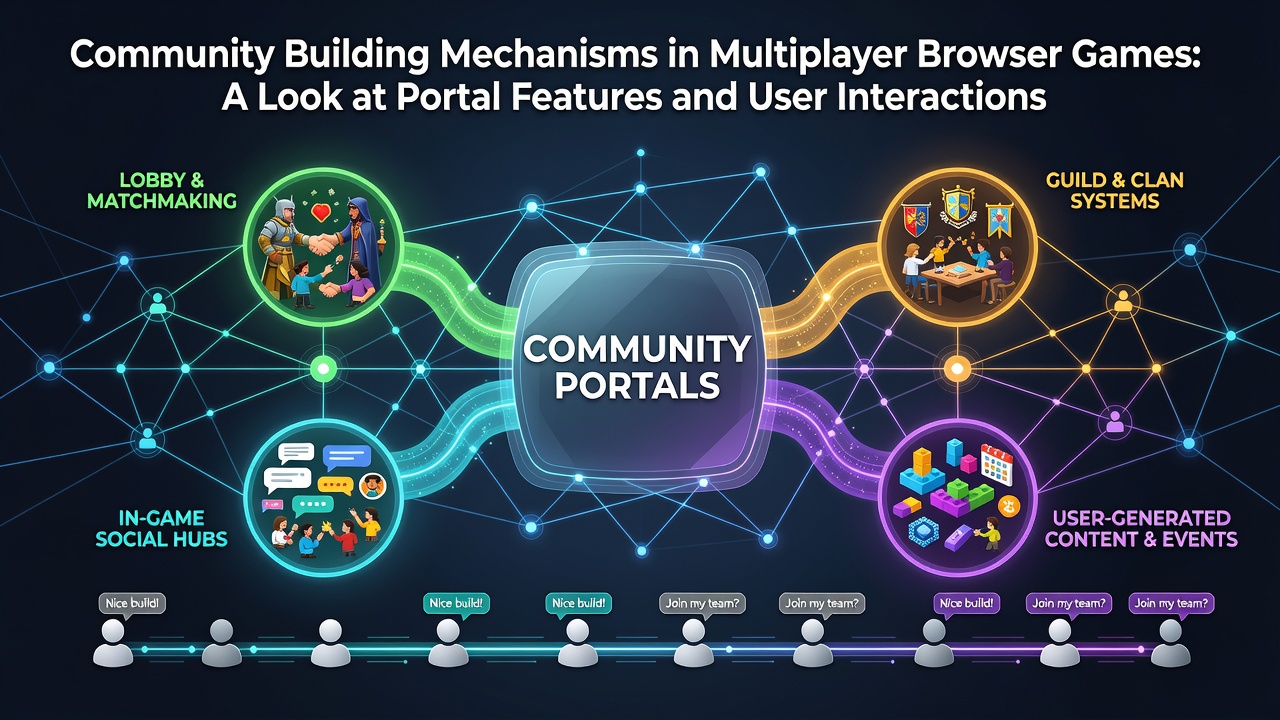
Community Building Mechanisms in Multiplayer Browser Games: A Look at Portal Features and User Interactions
Multiplayer browser games rely on integrated portal systems that connect players across different regions, and these platforms use specific features to encourage ongoing participation while data from July 2026 shows increased retention rates when social tools receive regular updates. Researchers have documented how shared spaces within game portals allow users to form groups, exchange strategies, and coordinate activities without leaving the browser environment, and this setup reduces friction compared to external forums or separate applications.
Core Portal Features Supporting Group Formation
Portal dashboards often include persistent chat channels, friend request systems, and clan creation tools that operate directly in the browser, and players who join these features report higher session lengths according to industry tracking. Leaderboards update in real time, displaying individual and team scores that prompt users to form alliances or compete in seasonal events, while integrated messaging lets participants coordinate moves during live matches or plan future sessions. Game portals also embed notification systems that alert users when friends come online or when community events begin, and this keeps engagement steady across time zones.
Observers note that many portals add customizable profile sections where users upload avatars, list achievements, and share preferred play styles, and these profiles help others identify compatible teammates quickly. Some systems incorporate voting mechanics for community decisions such as map rotations or rule adjustments, and this gives players a direct role in shaping the environment they inhabit. Data indicates that portals with these elements see more repeated logins because users develop social ties that extend beyond single matches.
User Interaction Patterns in Shared Spaces
Interactions begin with simple text exchanges in public lobbies, yet they frequently evolve into private group channels where strategies get discussed in detail, and participants often exchange tips on character builds or resource management while waiting for matches to start. Voice integration appears in select portals through browser-based audio, and this allows teams to call plays during fast-paced sessions without switching applications. Those who study player behavior have found that repeated interactions in these spaces lead to stable social circles that continue across multiple game titles hosted on the same portal.
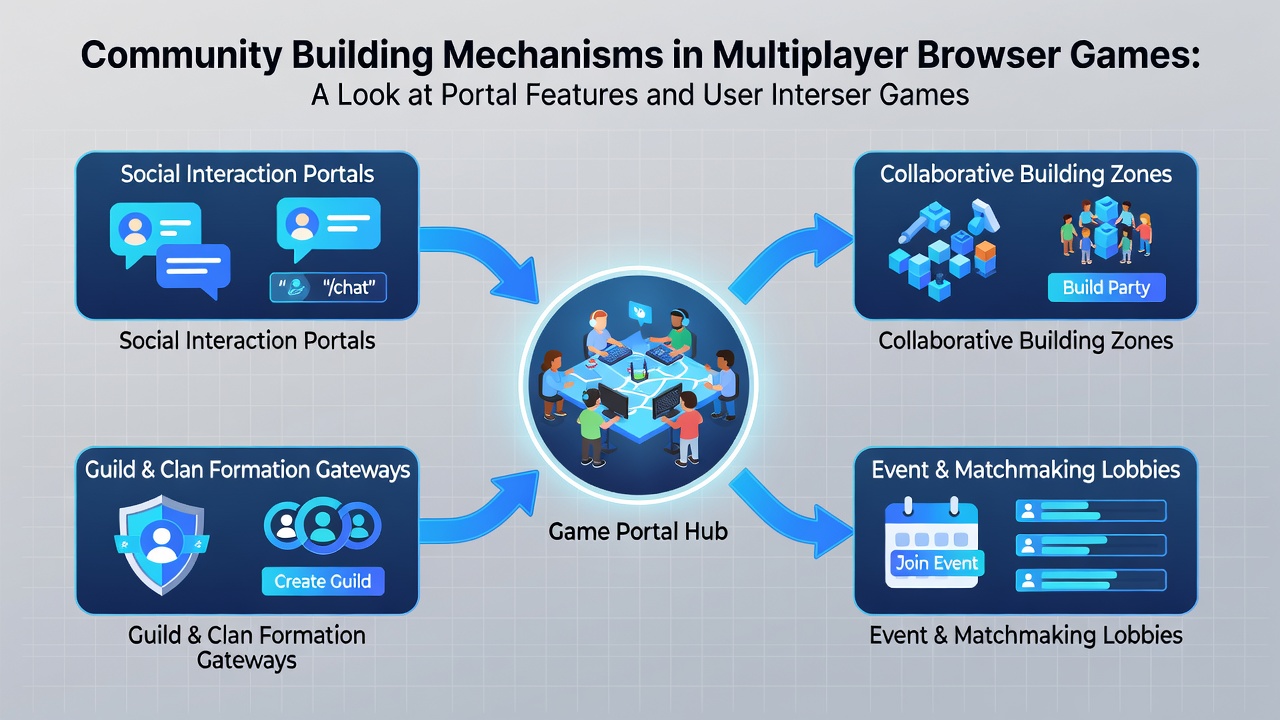
Events organized through the portal, such as weekly tournaments or collaborative challenges, draw in both regular and occasional users, and these timed activities create shared goals that strengthen group bonds. Participants who complete event milestones together often receive collective rewards, and this reinforces the value of coordinated effort. Researchers discovered that portals offering user-generated content tools, like map editors or item design options, further deepen involvement because creators seek feedback from their communities and iterate based on that input.
Technical Elements Enabling Sustained Engagement
Browser-based portals use lightweight frameworks that maintain connections even during brief disconnections, and this technical reliability supports longer conversations and group planning. Authentication systems tied to single accounts let users carry progress and social links across different games on the platform, while moderation tools allow community members to flag issues and maintain positive environments. Reports from the Entertainment Software Association highlight how seamless account integration correlates with higher community retention numbers across multiple titles.
Analytics dashboards visible to portal administrators track interaction frequency, and these insights guide feature adjustments that respond to actual user patterns rather than assumptions. Cross-region servers balance populations so that users always find active partners, and this prevents the isolation that can occur in smaller player bases. Some portals add translation layers for chat, and this broadens participation without requiring external language tools.
Conclusion
Portal features and user interactions together create the infrastructure that turns individual browser game sessions into ongoing community experiences, and continued refinement of these tools supports the growth of player networks over time. Data released in July 2026 from the Interactive Software Federation of Europe confirms that platforms investing in integrated social mechanics maintain stronger engagement metrics across their game libraries.