Flash Portals and the Player-Driven Events That Forged Enduring Multiplayer Networks
Frankie Schmid · Aug 26, 2026
Flash Portals and the Player-Driven Events That Forged Enduring Multiplayer Networks
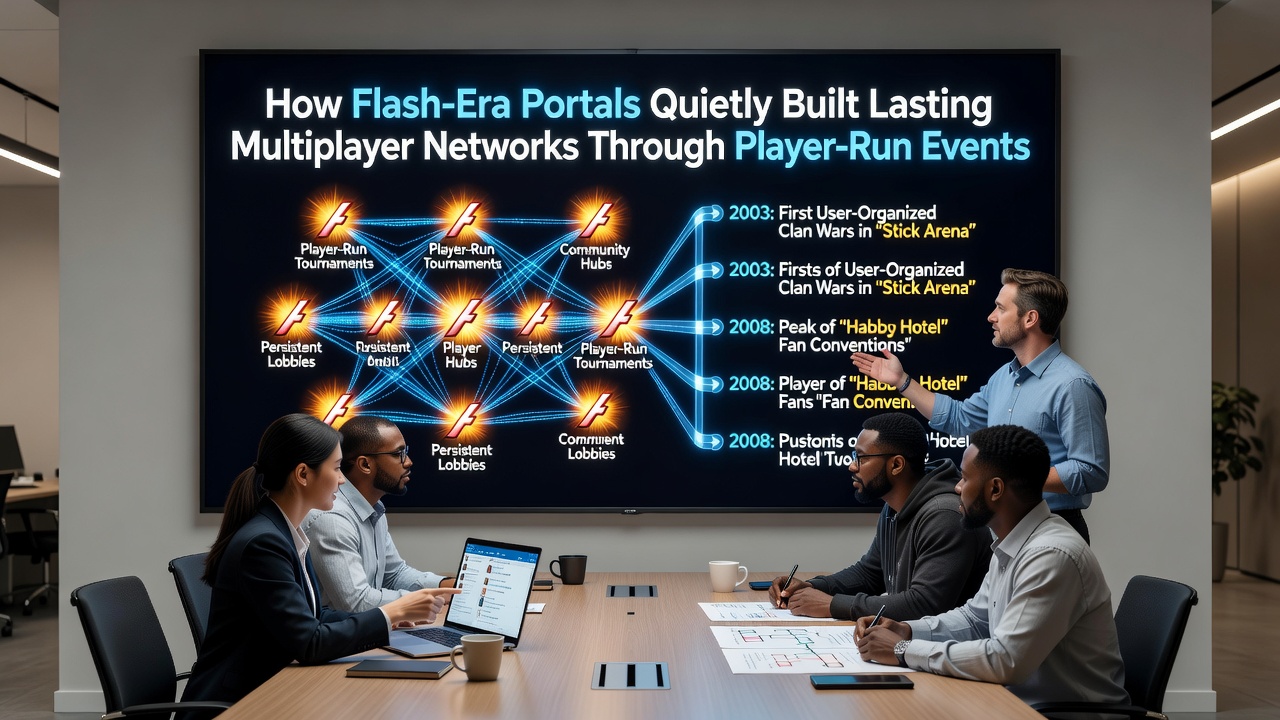
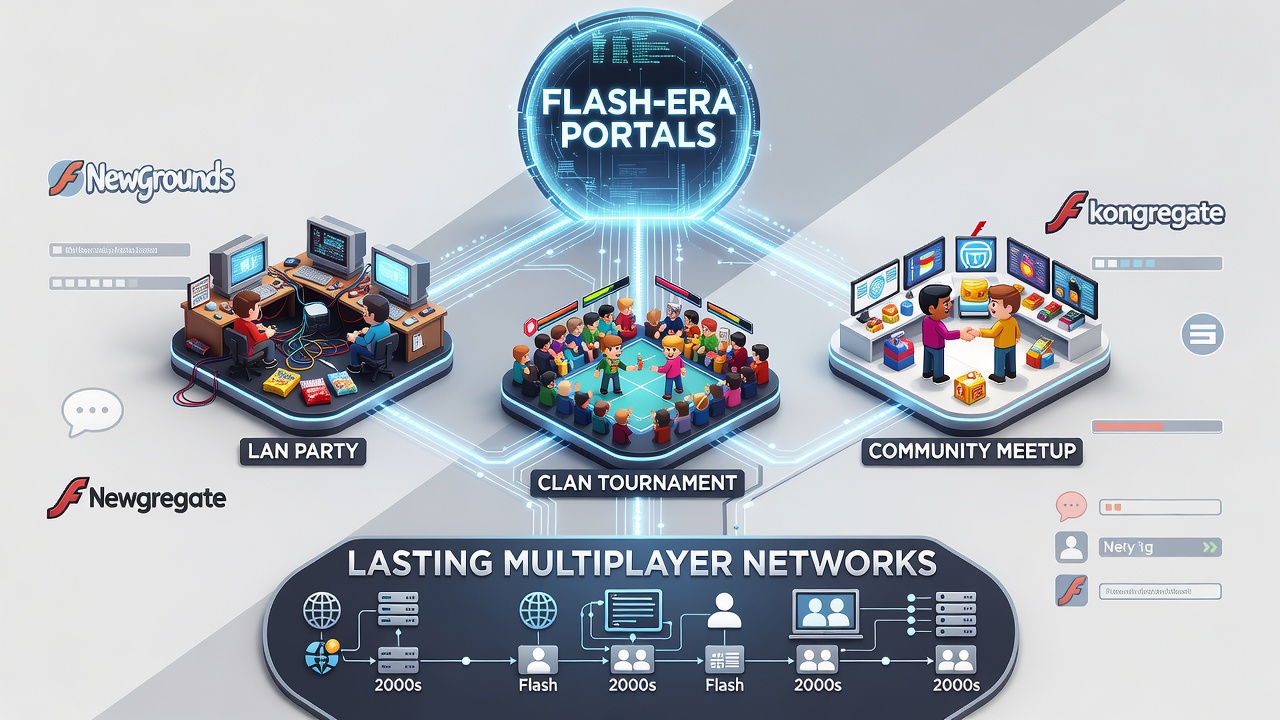
During the peak years of browser-based gaming many websites built around Adobe Flash technology hosted game collections that encouraged users to organize their own competitions and gatherings; these activities created connections among players that extended well beyond individual sessions and continued through later platform shifts. Sites such as Newgrounds and Kongregate featured sections where participants posted announcements for scheduled matches in titles that supported simultaneous play through simple server connections or shared object data. Observers note that these arrangements relied on forum threads and chat rooms embedded in the portals rather than official developer tools.
Early Structures That Supported Community Coordination
Player-run events often began with simple sign-up lists posted in comment sections under popular multiplayer Flash titles; users coordinated times across time zones and tracked results through shared spreadsheets or in-house leaderboards. Data from industry reports indicate that participation numbers in these informal tournaments grew steadily between 2005 and 2012 as broadband access expanded in North America and Europe. Researchers at the Entertainment Software Association documented rising engagement metrics for browser games during this period and highlighted the role of user-generated schedules in sustaining daily active users. Those who archived forum posts from the era found detailed threads outlining rulesets for games such as stick-figure fighters and tower defense variants adapted for head-to-head play.
Mechanics of Event Organization and Network Growth
Event hosts typically created dedicated chat channels or used external voice tools to manage matches while the portal itself handled login and basic scoring; this hybrid approach allowed networks to form without requiring the sites to maintain complex backend infrastructure. Figures from academic studies conducted at universities in Australia reveal that repeat participation in such events correlated with longer retention rates on the portals compared with solo play patterns. Players exchanged contact information through private messages which later transitioned to persistent groups on other platforms once Flash support declined. One documented case involved a series of weekly racing game challenges on a Canadian-hosted portal that evolved into a Discord server still operating with hundreds of members into the mid-2020s.
Transition and Preservation After Platform Changes
As browser support for Flash ended in 2020 many of these communities migrated archives of event logs and custom maps to open-source emulators or downloadable versions of the original games. Government statistics from the European Union on digital cultural heritage note increased interest in preserving browser-game communities as examples of early participatory online spaces. Portals that once hosted the events now redirect visitors to static pages containing historical leaderboards while former participants maintain separate wikis cataloging past tournaments and participant handles. This migration preserved the social graphs built during the Flash period even though the original technology no longer functions in standard browsers.
Additional examples surface in reports from research institutions in Japan where similar user-organized competitions on regional Flash portals produced lasting connections among participants who later contributed to indie game development scenes. Those archives show that event organizers often rotated hosting duties to prevent burnout and maintained continuity through detailed rule documents passed between volunteers. The resulting networks operated with minimal central oversight yet produced consistent activity logs that researchers continue to analyze for patterns in early social gaming behavior.
Documentation and Ongoing Relevance
Archives maintained by hobbyist groups include screenshots of in-game lobbies alongside transcribed voice-chat logs that illustrate how coordination occurred in real time. Industry analyses from Canadian trade associations emphasize that these grassroots structures prefigured later models of community management seen in modern free-to-play titles. Data compiled through university-led digital preservation projects in the United Kingdom further confirms that many multiplayer connections established during Flash events remain traceable through surviving usernames across current platforms. Observers tracking activity levels note that certain seasonal tournaments continue under emulated conditions with rulesets unchanged from their original Flash implementations.
Conclusion
Flash-era portals supplied the initial venues where players could post and join events without institutional backing and those arrangements generated durable social structures that adapted across technological transitions. Records from multiple regions demonstrate consistent patterns of self-organized play leading to extended network longevity. The mechanisms relied on simple posting systems and voluntary coordination rather than proprietary matchmaking leaving behind documented communities whose activity persists in altered forms today.