From Flash to HTML5: Technological Shifts Transforming Multiplayer Experiences in Web Gaming
Parker Keller · Aug 26, 2026
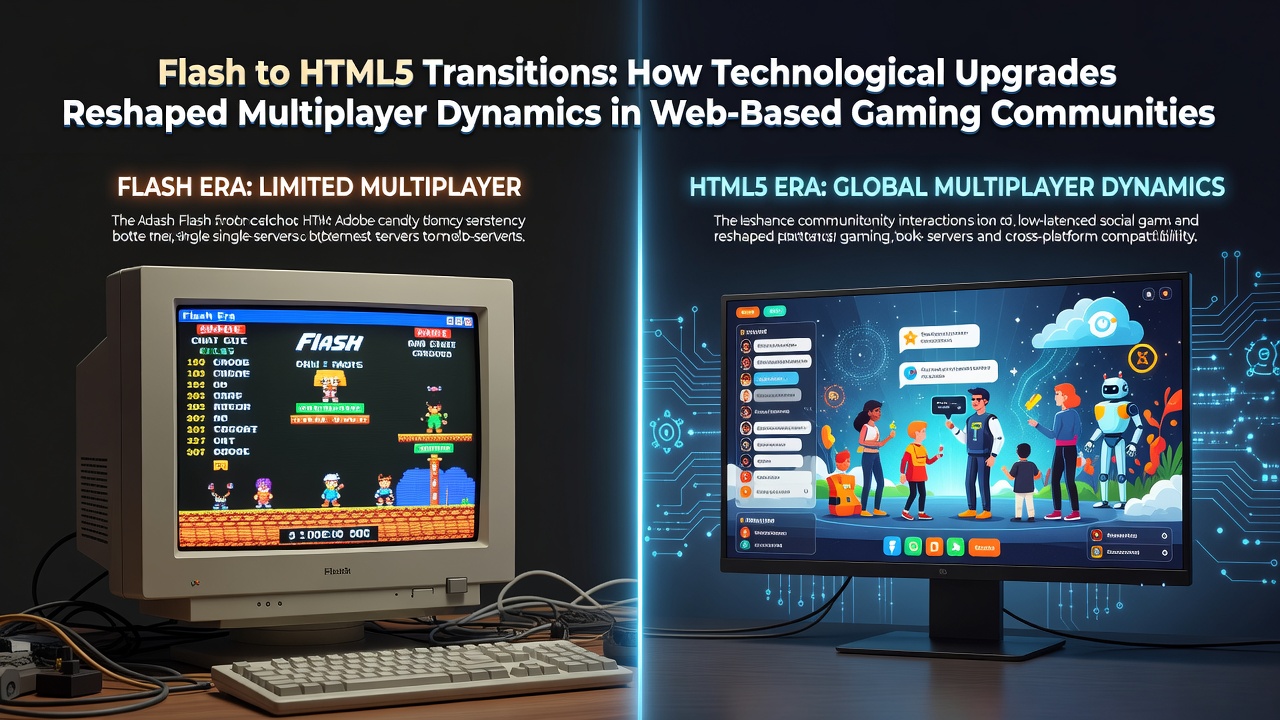
From Flash to HTML5: Technological Shifts Transforming Multiplayer Experiences in Web Gaming
Browser-based gaming underwent significant changes when Adobe ended support for Flash Player in December 2020, prompting developers and platforms to migrate multiplayer titles toward HTML5 technologies including Canvas, WebGL, and WebSockets. Those who've studied this period note how the removal of plugin dependencies allowed games to run natively across devices without additional installations, which in turn expanded access for users on mobile and desktop systems alike.
The End of Flash and Initial Migration Challenges
Flash once powered numerous web-based multiplayer environments because it handled real-time interactions through its own runtime, yet security vulnerabilities and inconsistent performance across operating systems led to its phased withdrawal. Research from industry groups indicates that many popular titles such as early versions of Agar.io and various social casino simulations had to be rebuilt from the ground up using HTML5 frameworks, and developers encountered hurdles around audio synchronization and input latency during the early transition phases. By 2021, platforms had begun reporting measurable drops in player retention on legacy Flash instances while HTML5 versions showed steadier engagement metrics.
HTML5 Features Enabling New Multiplayer Architectures
HTML5 introduced native support for persistent connections via WebSockets, which replaced older polling methods and reduced round-trip times in competitive scenarios. Observers note that this capability allowed servers to handle larger concurrent player counts without the overhead of browser plugins, leading to titles that supported dozens or even hundreds of simultaneous participants in shared worlds. WebGL further enabled richer graphics rendering directly in the browser, so game communities saw an increase in visually complex matches that previously required downloadable clients. Data from technology adoption studies shows that cross-platform compatibility improved dramatically, permitting players on tablets to join sessions with desktop users in the same lobby.
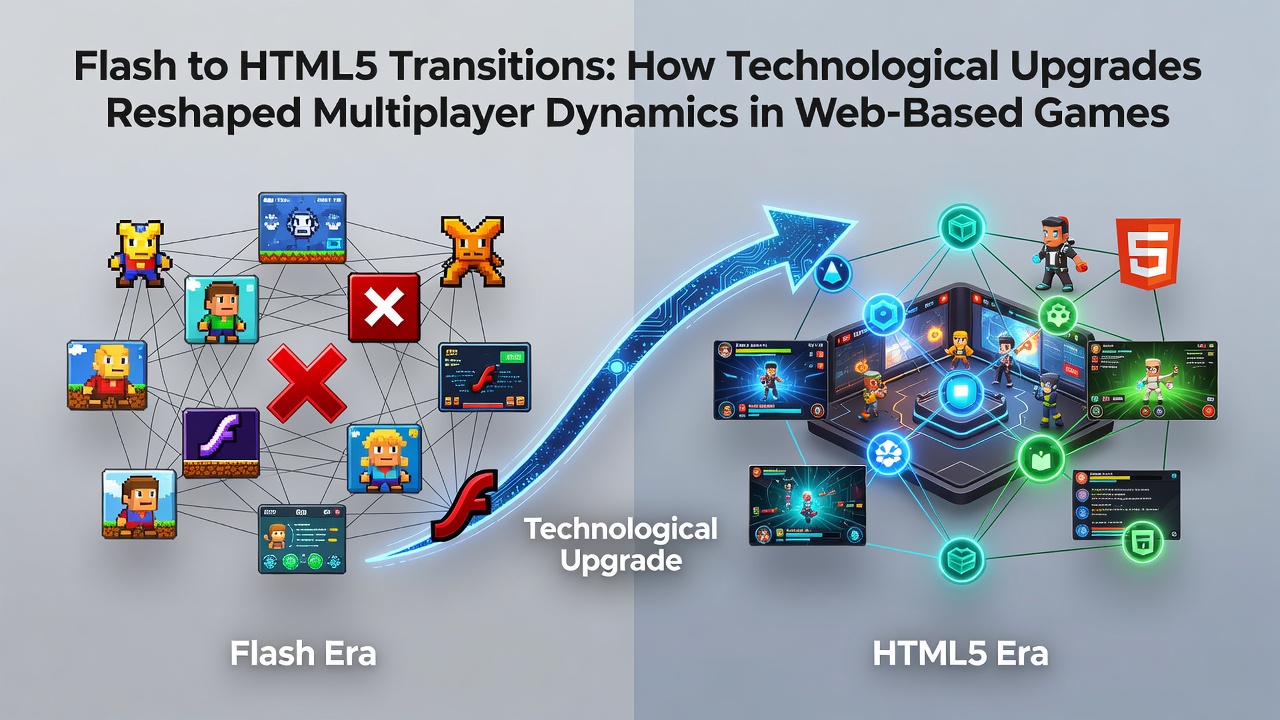
What's interesting is how these upgrades affected community structures. Earlier Flash games often relied on isolated rooms or servers that fragmented player bases, whereas HTML5 implementations facilitated unified matchmaking across regions. Academic analyses from institutions in North America and Europe highlight that latency reductions of up to 40 percent became common once WebSocket protocols stabilized, which encouraged more frequent participation in time-sensitive genres such as real-time strategy and battle arena formats.
Community Responses and Platform Adaptations
Gaming communities adapted by forming new forums and Discord servers dedicated to HTML5-specific mechanics, while older Flash-era clans migrated their strategies to account for improved synchronization. Figures from regional digital economy reports, including those compiled by Australian government agencies tracking online entertainment, reveal sustained growth in browser gaming hours between 2022 and 2025. Developers began incorporating progressive web app features that let users install multiplayer experiences directly from browsers, further blurring lines between web and native play. One study from a Canadian research consortium found that HTML5 titles retained higher daily active user rates in educational and casual competitive segments because they eliminated download barriers that had previously deterred casual participants.
Yet platform operators faced ongoing decisions around server infrastructure to support the expanded scale. Industry organizations such as the Entertainment Software Association have documented how HTML5 reduced distribution costs for independent studios, allowing smaller teams to launch multiplayer prototypes that reached global audiences quickly. This accessibility contributed to diversification in game types, with more emphasis on cooperative modes that leveraged real-time data exchange without plugin restrictions.
Ongoing Developments Through 2026
By August 2026, continued refinements in WebAssembly integration had further boosted performance parity with native applications, enabling even more intricate multiplayer simulations to operate entirely within browsers. Researchers tracking these trends point to increased participation from regions with limited hardware resources, since HTML5 titles generally require less processing power than their Flash predecessors once optimized. Community dynamics evolved accordingly, with voice chat and social features becoming standard because the underlying technology no longer competed with plugin resources for system access.
Conclusion
The transition from Flash to HTML5 ultimately altered how multiplayer dynamics functioned in web-based gaming by removing technical constraints and broadening device compatibility. Evidence from multiple sources shows expanded player bases, improved connection stability, and new design possibilities that reshaped community interactions without requiring external runtimes. Those monitoring the sector continue to observe how these foundational changes support ongoing innovation in browser-delivered competitive and cooperative experiences.