Inside the Ecosystem of Browser Portals: How Free Multiplayer Flash Titles Sparked Lasting Internet Gaming Networks and Tournament Growth
Nils Schulz · Aug 12, 2026
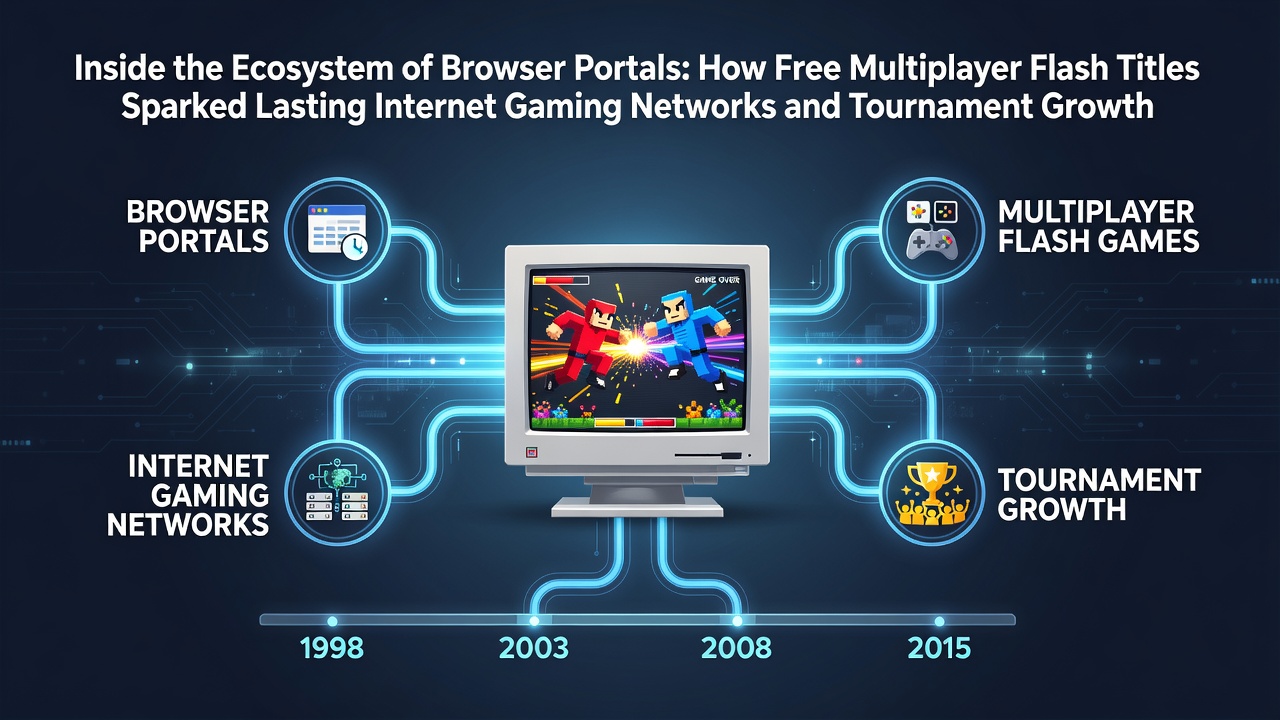
Inside the Ecosystem of Browser Portals: How Free Multiplayer Flash Titles Sparked Lasting Internet Gaming Networks and Tournament Growth
Browser portals emerged in the late 1990s and early 2000s as central hubs for free multiplayer Flash titles that required no downloads and ran directly in web browsers, and these platforms quickly connected players across regions through shared sessions and persistent leaderboards. Data from industry reports show that sites such as Newgrounds, Kongregate, and Armor Games hosted thousands of user-generated games while Flash technology enabled real-time interactions in titles like territory control shooters and racing competitions that encouraged repeated logins and team formations.
Portal Infrastructure and Player Connectivity
Flash files integrated with simple server architectures allowed multiple users to join the same match lobby, and this setup created the foundation for lasting networks because players exchanged usernames and formed groups that extended beyond single sessions. Observers note that portals tracked playtime statistics automatically, which in turn highlighted top performers and drew in new participants seeking competitive matches, while features such as in-game messaging and friend lists turned casual visitors into regular community members who returned daily.
Researchers discovered that these environments lowered barriers compared with installed client software, and figures reveal millions of monthly active users on major portals by 2008 because anyone with an internet connection could participate without hardware upgrades or subscriptions. The same infrastructure supported tournament brackets that organizers built manually at first, yet automation scripts soon handled sign-ups, match scheduling, and prize distribution for events that ran weekly.
Multiplayer Mechanics Driving Network Formation
Free multiplayer Flash titles often featured cooperative modes alongside competitive ones, and this combination prompted players to coordinate strategies in real time through built-in chat while they advanced shared objectives such as capturing flags or surviving waves. Those who've studied this period point out that guilds and clans formed organically around popular games, and these groups maintained external forums or IRC channels that survived individual game shutdowns because members had already established relationships independent of any single title.
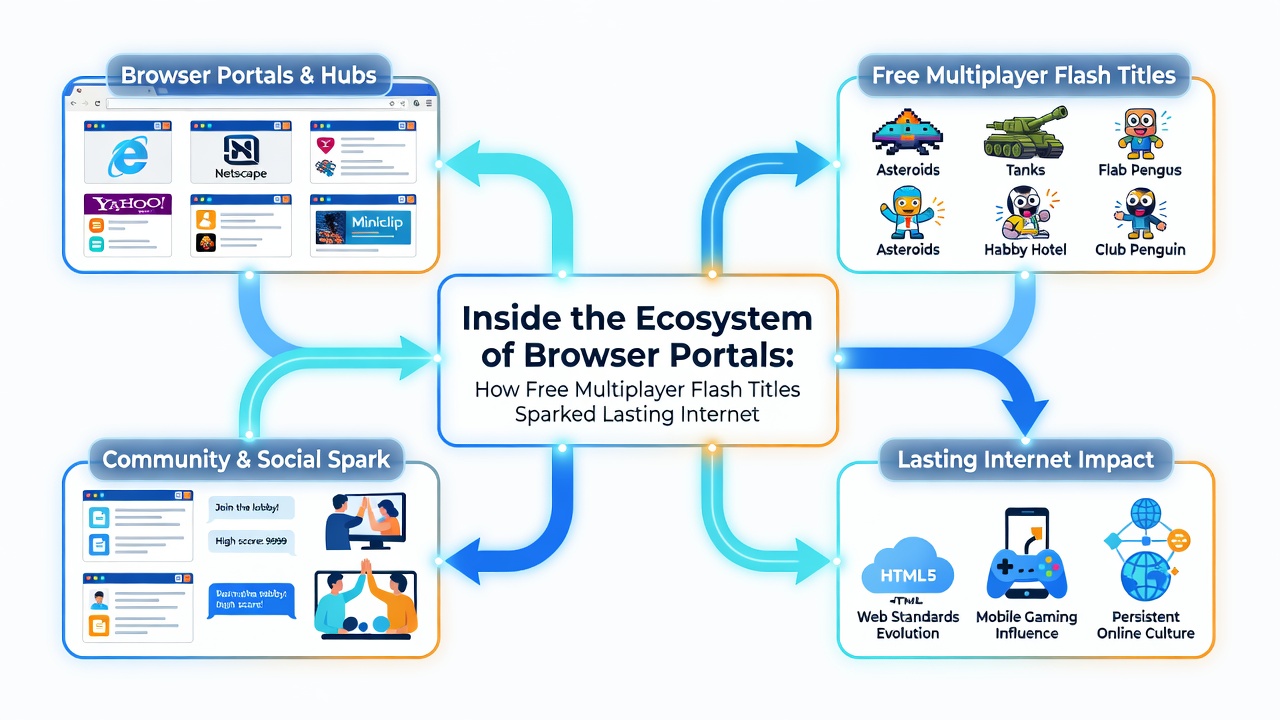
Evidence suggests that leaderboards updated live during matches rewarded consistent performance, and this visibility encouraged dedicated players to organize practice sessions that strengthened bonds across time zones. What's interesting is how these early networks later migrated to dedicated Discord servers and Steam groups once Flash support ended, preserving the same social structures that originated in browser lobbies.
Tournament Expansion and Structured Competition
Portal operators noticed rising engagement around organized events and began offering small cash prizes or virtual rewards that attracted larger fields, while external sites mirrored those brackets for broader audiences. Reports indicate that by the mid-2000s some Flash tournaments drew hundreds of entrants per weekend, and sponsors from hardware manufacturers and energy drink brands joined because measurable viewership numbers demonstrated marketing value.
Academic sources document how these competitions introduced formal rulesets, referees, and streaming commentary that later influenced larger esports ecosystems, and participants carried those organizational skills forward when they moved into new platforms. Data from the Entertainment Software Association shows continued growth in online competitive play during this transition period, and parallel trends appear in European Commission digital economy analyses that tracked browser-based entertainment adoption across member states.
Legacy Networks in 2026 and Beyond
As of August 2026 archives maintained by community volunteers continue to host original Flash files through emulation layers, and these preserved environments still support occasional tournament revivals that reconnect veterans with newer players introduced via retro gaming channels. Observers note that the social graphs built during the Flash era persist in private servers and Discord servers that list thousands of members who first met in browser lobbies, and cross-generational events now blend classic mechanics with modern tools such as voice chat overlays.
Industry organizations record that many current esports professionals trace their first competitive experiences to these free multiplayer portals, and the low-cost entry model established then continues to shape how independent developers launch browser-accessible prototypes today. Research indicates sustained interest in archived leaderboards and replay files, which researchers use to study early network dynamics and community governance patterns that predate contemporary platform moderation systems.
Conclusion
Browser portals and their free multiplayer Flash content established durable player networks through accessible technology and built-in social features, and the tournament structures that grew from those environments laid groundwork for later competitive scenes. Those networks adapted when Flash support concluded, moving to new platforms while retaining core member relationships formed years earlier, and data continue to show their influence on how online gaming communities organize and compete in subsequent decades.