Understanding Group Dynamics in Long-Running Browser Multiplayer Games
Parker Keller · Oct 5, 2026
Understanding Group Dynamics in Long-Running Browser Multiplayer Games
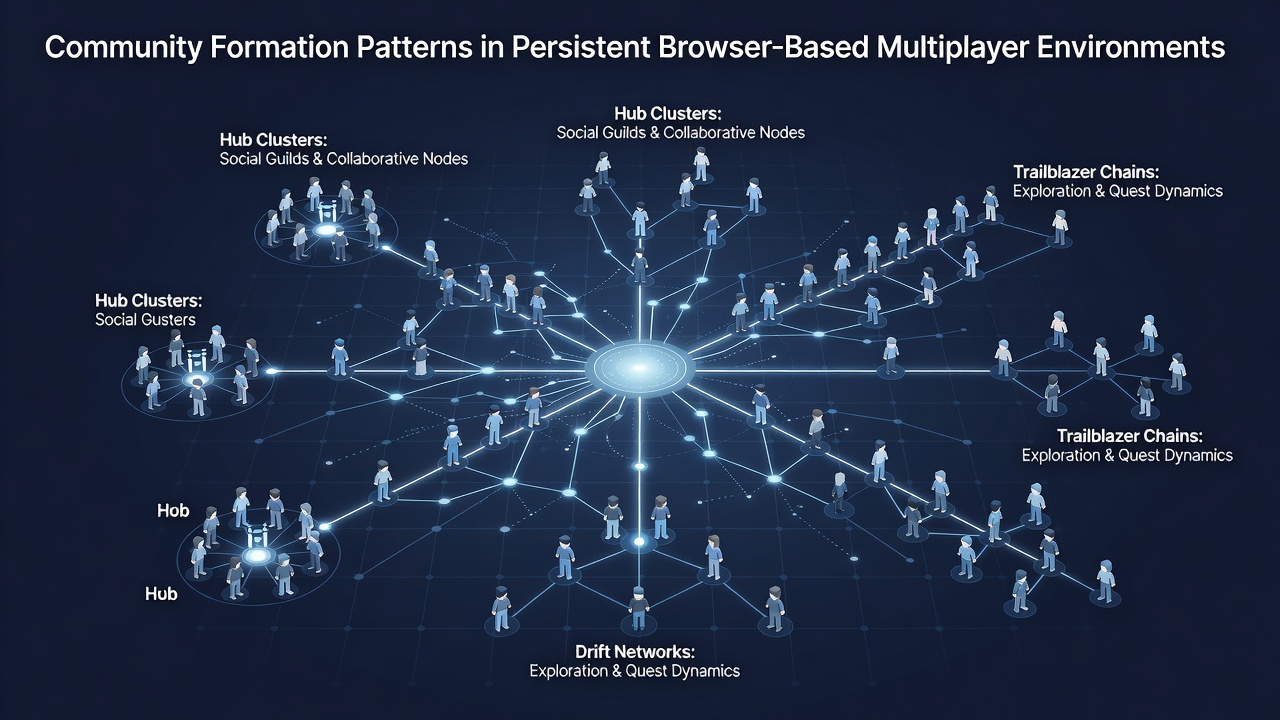
Browser-based multiplayer environments that persist over months and years create unique conditions for community building, and researchers have tracked how these digital spaces encourage repeated interactions among participants who never meet offline. Data from multiple studies show that players often begin with small cooperative tasks such as resource sharing or joint problem solving, then expand those contacts into larger networks as trust accumulates through consistent daily logins and shared goals.
Accessibility plays a central role because these games require no downloads and run on standard web browsers, which lowers barriers for new arrivals and allows quick re-entry after absences. Observers note that this ease of access supports steady population turnover while still preserving core groups that maintain continuity across seasons, and figures from industry reports indicate browser titles retain active user bases longer than many expect when persistence mechanics reward long-term participation.
Initial Contact and Trust Development
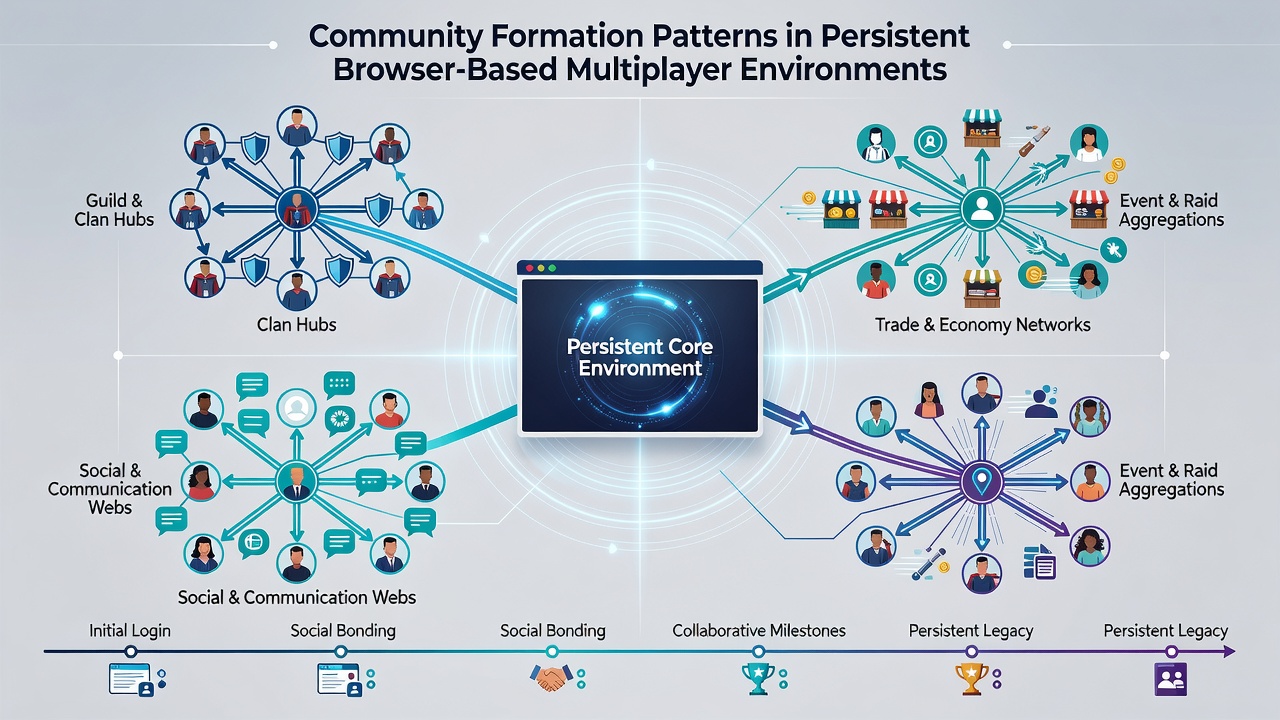
New participants typically enter through public chat channels or tutorial zones where brief exchanges occur, yet these short messages rarely lead to lasting bonds unless followed by repeated joint activities. Studies of persistent browser worlds reveal that players who complete even one collaborative quest together show higher rates of returning to the same location at similar times on subsequent days, and this pattern repeats across different titles regardless of theme.
Trust forms through observable consistency rather than declarations, so individuals who show up reliably for scheduled events gradually gain recognition from others who track participation metrics visible in game interfaces. One analysis of European browser communities found that visible contribution logs, such as guild donation records or event attendance counters, correlate strongly with invitation rates into private channels adn shared resource pools.
Role Specialization and Hierarchy Emergence
Over extended periods, communities develop internal divisions of labor where certain players focus on crafting, scouting, or leadership tasks, and these specializations become predictable enough that others adjust their own schedules around them. Data collected from several long-running titles demonstrate that hierarchies solidify when a small number of members control key resources or information channels, yet the same studies show frequent challenges to authority when performance metrics decline or newcomers demonstrate superior efficiency.
Browser environments facilitate this evolution because chat logs and activity histories remain accessible without external tools, allowing participants to review past contributions and adjust alliances accordingly. Researchers have documented cases where leadership transitions occur smoothly when outgoing coordinators publicly transfer access rights through in-game mechanisms, preserving group stability during the handoff.
Seasonal Fluctuations and Retention Patterns
Activity levels in these environments often rise during holiday periods and drop during summer months, yet core groups maintain presence through scheduled events that accommodate varying time zones. Reports compiled in late 2026 highlight how October participation spikes coincide with new content releases in multiple browser titles, drawing returning players who re-establish contact with former group members within days of login. According to data released by the Entertainment Software Association, browser multiplayer segments showed measurable retention gains during these windows compared with non-persistent formats.
Geographic diversity within communities adds another layer, because players from different regions bring distinct play schedules that force groups to adopt asynchronous communication methods such as forum posts or recorded voice messages. Canadian research on digital play patterns indicates that communities incorporating members across multiple continents develop more robust documentation practices to compensate for time differences, and these practices in turn strengthen group identity.
External Influences on Internal Structures
Platform updates and server merges occasionally disrupt established communities by redistributing populations or altering mechanics that previously supported cooperation, and observers have recorded both fragmentation and consolidation following such events. A study conducted at a European research institution tracked one title through multiple merges and found that pre-existing social ties predicted which subgroups survived the transition with higher accuracy than individual skill levels.
Moderation policies also shape formation patterns, since rules against certain chat behaviors or resource transfers can limit spontaneous alliances while encouraging formalized agreements documented in public channels. Those who study these systems note that transparent enforcement records help maintain participation because players perceive fairness in administrative decisions when logs remain visible.
Conclusion
Persistent browser-based multiplayer environments continue to generate observable community structures through repeated low-barrier interactions, role differentiation, and adaptive responses to platform changes. Evidence gathered across regions and time periods demonstrates that accessibility combined with persistence produces measurable patterns of group formation and maintenance that differ from those seen in downloadable client games. Continued monitoring of these spaces will likely reveal further refinements as new browser technologies and content cycles emerge.